Key takeaways
- A signal stack provides layered diagnostic data that reveals what failed, what was affected, and who needs to act. This enables faster, more confident resolution.
- Proactive monitoring breaks the reactive cycle by detecting issues before customers are impacted and before carrier evidence expires.
- Speed and detail quality are critical. Tthe difference between a quick fix and a multi-day investigation depends on capturing evidence while incidents are live.
- Automated alerting and deep integrations push actionable information to the right teams immediately, reducing mean time to resolution.
- Continuous CX monitoring protects your brand by verifying you’re the first to know about issues, not your customers.
How do you speed up resolution of call failures? By combining continuous monitoring with a signal stack, a layered set of diagnostic data points that together reveal what failed, what was affected, and who needs to act, you can identify and resolve issues before they affect customers.
In voice services, a failed call isn’t just a technical glitch. Beyond a mere defect in the backend infrastructure that powers your CX, a call failure is a breakdown in communication between your business and your customers. It’s a broken connection for a real person, and each defect degrades customer trust in your brand, creates reputational risks, and shrinks your bottom line.
That’s why great ops are essential for providing two benefits: identifying issues quickly and eliminating them before they affect your customers.
Understand your call performance from the customer perspective with Cyara’s toll-free and in-country number testing solution.
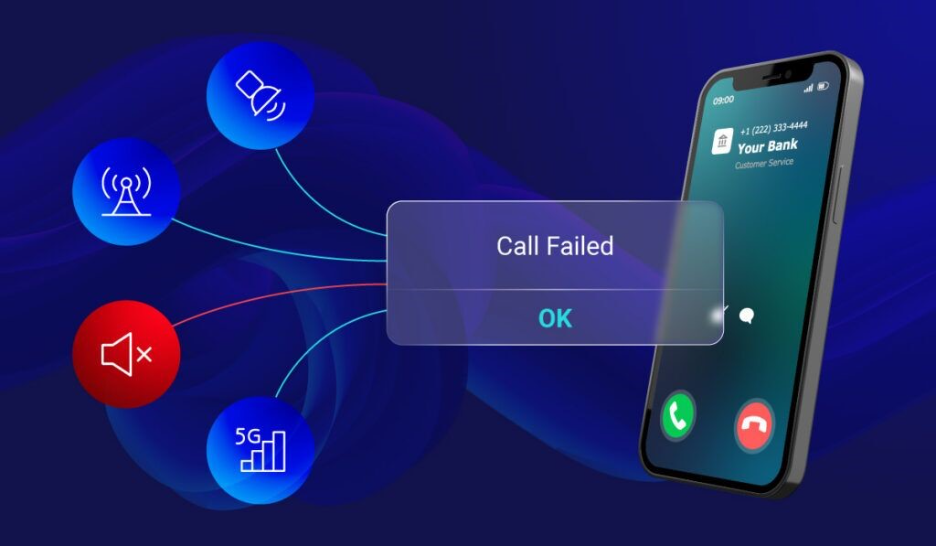
It all comes down to discovery. You need to know exactly what is happening while the issue is still live and before it affects your end customer.
The difference between a quick fix and a three-day headache is the combination of details, automation, deep integrations, and speed.
The reality of reactive monitoring
When an issue arises in a reactive world, the engineering team is stuck waiting for the help desk to notice a trend. They spend hours manually attempting to identify what the issue was by reconstructing the timeline and gathering examples. Then, by the time they have enough evidence to push a carrier for an answer, the opportunity is gone.
The carrier tells the team: “It’s too late… those specific traces have already rotated out of our system.” But, when it comes to assuring CX quality and meeting performance standards, time is of the essence. Without catching the issue while it’s happening, you aren’t learning! You’re just documenting a mystery that is guaranteed to happen again tomorrow.
Let’s be honest: there is no ideal world where issues don’t happen. Telecom is complex, and between global carriers and evolving infrastructure, a “perfect” network is a myth. The goal is to have the visibility to empower your team and resolve issues before they scale or affect your customers. In these moments, you cannot afford to be blind.
How does proactive monitoring with a signal stack speed up issue resolution?
Calls fail in subtle ways across different environments and routes. So, while some issues are easily detected, another call failure may not be a total “blackout” right away, so an alarm might be dismissed or may not trip at all.
With proactive monitoring, you can:
- Identify the pattern and address issues before they affect your customers.
- Give carriers the exact call samples they need and keep them accountable.
- Secure the evidence while it’s still fresh.
This approach changes completely once you combine continuous monitoring with intelligent alerting automation and deep integrations, allowing you to break that reactive cycle. Instead of waiting for a customer complaint, the system pushes the technical details into your internal platforms while the incident is still live. You change the timeline entirely by having an alert with the details in your hand and a fix in motion before the first real customer even dials the number. Organizations using this approach typically reduce mean time to resolution significantly compared to reactive methods.
| Reactive monitoring | Proactive monitoring with signal stack |
| Wait for customer complaints or help desk trends | Detect issues automatically before customers are affected |
| Manually reconstruct timelines and gather examples | Receive immediate alerts with full diagnostic details |
| Evidence often expires before investigation begins | Capture evidence while the incident is still live |
| Carriers cannot assist due to rotated traces | Provide carriers exact call samples for accountability |
| Resolution takes hours or days | Resolution begins within minutes |
What is a signal stack for call monitoring?
To act with this level of confidence, you need more than just a “call failed” notification. You need a consistent way to understand the failure while it’s happening. A signal stack is a layered set of diagnostic data points that together reveal what failed, what was affected, and who needs to act.
Cyara Voice Assure provides this powerful visibility so you can see:
- What failed: The specific failure type, such as connection, post-connection behavior (actions occurring after the call connects, such as IVR navigation), or audio quality issues.
- What was affected: The specific numbers, routes, or carriers experiencing the problem.
- What was experienced: The customer-facing symptoms, including unable to reach or carrier messages, call drop or dead air (silence on the line when audio should be present), or high latency.
- What it points to: The diagnostic indicators showing where to focus the investigation.
- Who needs to act: Whether the fix requires internal teams or external partners such as carriers.
Plus, Cyara automatically sends the alert directly to the teams that need to know about it, exactly when they need it.
This level of signal doesn’t replace investigation, but makes investigation possible.
So, now it turns a “mystery” into an actionable plan.
Conclusion
Continuous CX performance monitoring isn’t a “nice-to-have” feature. It’s about not being at the mercy of the unknown.
Being “right” about a failure three hours after the evidence is deleted doesn’t help anyone. Speed and the quality of details matter.
Catching defects before they hit the customer, and having the automation and signal stack to prove it, is what actually protects the experience you’ve worked so hard to build.
At Cyara, we stay humble about the tech, but we’re very serious about the result. We provide the full signal stack so you’re the first to know and act whenever an issue arises.
Contact us to see how you can improve your phone line performance, or visit cyara.com for more information.
Frequently Asked Questions
The signal stack is a framework for understanding a call failure while it is still happening. It surfaces what failed, what was affected, what the customer experienced, where to focus the investigation, and who needs to act.
A simple failure notification doesn’t provide the context needed to act. Without details like the specific number, route, carrier, or failure type, teams are left reconstructing timelines after the fact, often after the evidence has already rotated out of carrier systems.
Continuous monitoring combined with intelligent alerting pushes technical details into your internal platforms while an incident is still live. This allows your team to identify patterns and begin resolving issues before customers are ever affected.
Cyara Voice Assure can surface failures related to call connection, post-connection behavior, and audio quality, including issues like dead air, high latency, call drops, and carrier messages.
By capturing call samples and evidence while an issue is still active, Cyara gives your team the exact data carriers need to investigate. This prevents the common scenario where traces have already expired by the time a problem is escalated.
In a reactive model, teams wait for customer complaints or for failure noise to grow loud enough to trigger an alarm. This means issues are documented after the fact rather than resolved in real time, and the same problems are likely to recur.
Cyara automatically sends alerts directly to the teams that need to know, at the moment they need to know it, so the right people can act without delay.