
• Skip to primary navigation
  • Skip to main content
  • Skip to footer
Cyara

Cyara

Cyara Customer Experience Assurance Platform

  • Login
  • Contact Us
  • Request a demo
  • Search
  • Login
  • Contact us
  • Request a demo
  • Why Cyara
    • Cyara Agentic Platform
    • Cyara partner network
    • Cyara Academy
  • Products
    • ValidationBuild your CX stack with confidence – every layer, validated early
          • AI bot validationValidate conversational AI, GenAI, agentic AI chat, and voice bots
          • Telco infrastructureValidate carrier connectivity and routing for global calling and SMS
          • Network & endpointsValidate WebRTC media paths and agent desktop connectivity
    • ReadinessDeploy your CX journeys with confidence – at scale, through change
          • Agentic journey assuranceAssure end-to-end agentic and hybrid journeys before go-live
          • Load and performanceAssure CX journeys through load, peak, and scale
          • Human agent readinessAssure inbound and outbound agent paths before go-live
    • ObservabilityRun your CX operations with confidence – continuous monitoring, proactive resolution
          • Agentic AI trust & governanceMonitor AI agent hallucination, compliance, and misuse
          • Omnichannel observabilityMonitor end-to-end CX journey experience across channels
          • Human agent monitoringMonitor live agent connectivity and experience in real-time
    • Learn about the Cyara Agentic Platform
  • Resources
    • CX Assurance blog
    • Customer success showcase
    • CX use cases
    • Events & upcoming webinars
    • On-demand webinars
    • Resource library
  • About Us
        • About Cyara

        • About Cyara
        • Leadership
        • Careers
        • Legal statements, policies, & agreements
        • Services

        • Cyara Academy
        • Consulting services
        • Customer success services
        • Technical support
        • News

        • Press releases
        • Media coverage
        • Cyara awards
        • Partners

        • Partners

Blog / CX Assurance

April 9, 2024

What is Packet Loss? 

Lorraine Kelleher

You’ve probably heard of latency, jitter, and telephone echo, but have you ever experienced the problem of packet loss? In this article, we’ll explain what it is, the causes, and how you can monitor your network to identify it. 

Cyara’s automated, global number testing solution helps you improve your CX and understand how your customers are experiencing your calls.
Empty box with a sad face

What is Packet Loss? 

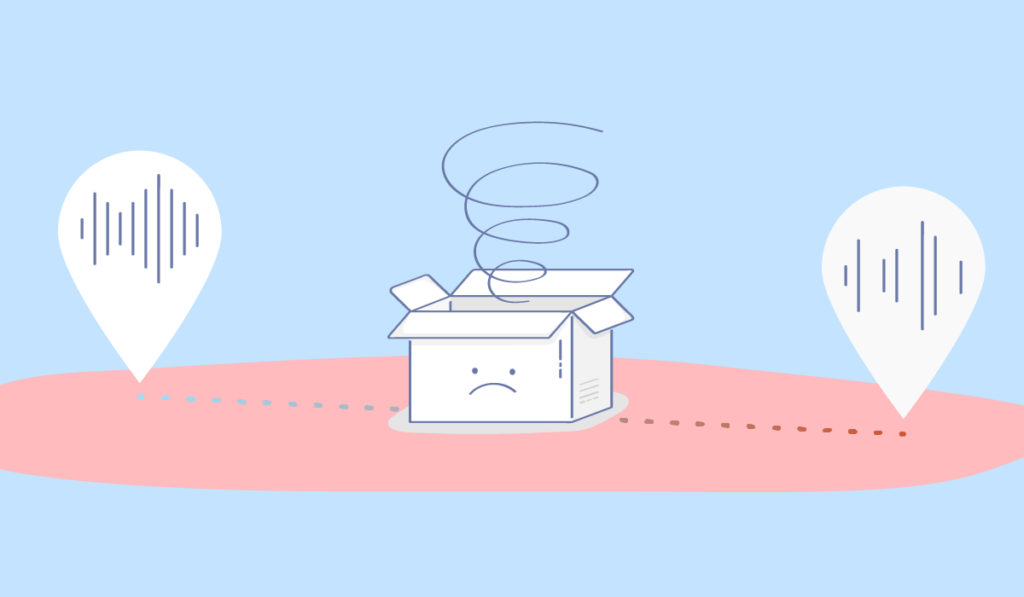
Packet loss is when the “packets” or pieces of data traveling across a network do not make it to their final destination. The result of these packets failing to reach the opposite end of the network is missing data. In a VoIP call, this means that pieces of the conversation will be lacking. 

This often causes participants to leave a phone call, and either attempt to re-establish a connection, or to simply move to another form of communication. Concerningly, they may also simply choose to take their query to another organization. 

For VoIP calls, dropping a small number of packets won’t cause a significant issue. If only one or two words are jumbled in a call, we can still generally understand the full message. However, if packet loss reaches a continuous and significant level—for example, 5% to 10%—individuals will begin to notice that entire sentences are missing. Extended pauses in the middle of conversations are also likely to occur. This is an infuriating experience for all parties and is something that you should ensure your customers do not experience when calling your team. 

What Causes Packet Loss? 

Packet loss typically occurs due to an internal network issue. Of course, the challenge is understanding and locating the exact weak point. There can be a wide range of reasons that cause packets to be either lost or discarded. These include: 

  • Network congestion: The most obvious, and easiest to fix, cause of packet loss is network congestion. If too many devices are using the same system, at the same time, bandwidth will run out. This can slow your connection to a crawl.  
  • Bandwidth problems: Insufficient bandwidth or bandwidth caps on VoIP calls may cause some packets to be dropped. It can also cause them to be delivered in an incorrect order. 
  • Poor hardware: Internet network connections rely on various hardware components like modems, routers, and switches. Poor or obsolete hardware, including outdated firmware or software, damaged ethernet cables, or malfunctioning routers all have the ability to negatively impact your call quality. 
  • Over reliance on WiFi: While more convenient, wireless network connections are simply less robust and reliable when compared to a wired connection. Signals can be easily blocked by walls or furniture, leading to interference. This typically causes delays in the delivery of data packets. 
  • Software issues: Improper configuration on the software side also leads to packet loss. These issues could range from interoperability bugs in the network, to improper software configuration within your devices. 

Network Monitoring 

General network monitoring tools measure a selection of audio quality factors including packet loss. However, they generally don’t provide you with the insights you need to identify and troubleshoot the problem.  

Cyara Voice Assure provides you with a comprehensive view of your entire network. Critically, this includes an end-to-end perspective that crosses international carrier networks, going beyond the private network edge and into the wider public network.  

This ensures that your call monitoring is accurately replicating the exact experiences your customers across the world have when they contact your organization. Learn more about Voice Assure on our product page or contact our team today! 

Read more about: Customer experience (CX), CX assurance, Jitter, Latency, Packet Loss, Voice over Internet Protocol (VoIP)

Related Posts

chatbot testing

June 11, 2026

Silent AI Failures in CX: When Bots Respond Correctly but Still Frustrate Users

Learn how to reduce risk, customer frustrations, and deliver better CX with AI and chatbot testing solutions.

Topics: AI chatbot testing, AI-Powered CX, Automated testing, Chatbot assurance, Chatbot testing, Customer experience (CX)

global cx testing

May 28, 2026

Scaling CX Globally Without Breaking the Infrastructure

The leap from regional to global presence is a major milestone in any organization. It means new markets coming online, new customers discovering your brand, and the ability to support interactions around the clock, across continents. A once-localized operation suddenly becomes something more dynamic—always on, always moving, and expected to work seamlessly wherever customers are.  […]

Topics: Automated testing, Customer experience (CX), Cyara Cruncher, Cyara Pulse, Cyara Voice Assure, Voice Quality

real-time cx monitoring

May 21, 2026

The Power of End-to-End CX Monitoring for Real-Time Visibility

Learn how end-to-end, real-time CX monitoring is key to mitigating risk and delivering seamless customer interactions.

Topics: Customer experience (CX), Customer experience (CX) monitoring, CX monitoring, Cyara Pulse

Footer

Cyara
Leader Enterprise Best Est. ROI Enterprise Easiest To Use Enterprise
  • LinkedIn
  • YouTube
  • Products
    • Cyara Agentic Platform
    • Validation
      • Botium
      • Voice Assure
      • testRTC
    • Readiness
      • Velocity
      • Cruncher
      • testRTC
    • Observability
      • AI Trust
      • Pulse360
      • Pulse
      • Number Trust
      • ResolveAX
  • Resources
    • CX Assurance Blog
    • Events & upcoming webinars
    • On-demand webinars
    • Customer success showcase
    • Resource library
  • Company
    • About us
    • Leadership
    • Careers
    • Press releases
    • Media coverage
    • Cyara awards
    • Partners
    • Legal
  • Support
    • Cyara Academy
    • Support sites

Copyright © 2006–2026 Cyara® Inc. The Cyara logo, names and marks associated with Cyara’s products and services are trademarks of Cyara. All rights reserved. Privacy Statement