
• Skip to primary navigation
  • Skip to main content
  • Skip to footer
Cyara

Cyara

Cyara Customer Experience Assurance Platform

  • Login
  • Contact Us
  • Request a demo
  • Login
  • Contact us
  • Request a demo
  • Why Cyara
    • AI-Led CX Assurance Platform
    • AI vision for CX
    • Cyara partner network
    • Cyara Academy
  • Solutions
    • Transform
          • TRANSFORM – Drive CX Change

          • Functional, regression, & objective testing | Cyara Velocity
          • Performance testing | Cyara Cruncher
          • See all use cases >
          • Cyara platform - Transform - Drive CX change
    • Monitor
          • MONITOR – Assure CX Journeys

          • Telecom assurance | Cyara Voice Assure
          • CX & telecom monitoring | Cyara Pulse 360
          • Call ID line assurance | Cyara Number Trust
          • Agent environment assurance | Cyara ResolveAX
          • CX monitoring | Cyara Pulse
          • See all use cases >
          • Cyara platform - Monitor - Assure CX journeys
    • Optimize
          • OPTIMIZE — Leverage AI for CX

          • Conversational AI optimization | Cyara Botium
            • Functional & regression testing for AI agents
            • LLM-driven AI agent testing
            • Load testing for AI agents
            • NLP analytics for conversational AI in CX
          • Generative AI assurance | Cyara AI Trust
          • See all use cases >
          • Cyara platform - Optimize - Leverage AI for CX
    • Connect
          • CONNECT — Assure WebRTC CX

          • WebRTC optimization | Cyara testRTC
          • WebRTC monitoring | Cyara watchRTC
          • WebRTC quality assurance | Cyara qualityRTC
          • See all use cases >
          • Cyara platform - Connect - Assure WebRTC CX
  • Resources
    • CX Assurance blog
    • Customer success showcase
    • CX use cases
    • Events & upcoming webinars
    • On-demand webinars
    • Resource library
    • Customer community
  • About Us
        • About Cyara

        • About Cyara
        • Leadership
        • Careers
        • Legal statements, policies, & agreements
        • Services

        • Cyara Academy
        • Consulting services
        • Customer success services
        • Technical support
        • News

        • CEO’s desk
        • Press releases
        • Media coverage
        • Cyara awards
        • Partners

        • Partners

Blog / CX Assurance

March 12, 2024

Are You Measuring Latency on Your Calls?

Lorraine Kelleher

Do you know how to accurately measure the level of latency on your customer calls? Research by IDC states that “global business leaders rate latency a higher priority than speed.” 

Unfortunately, despite this, latency during calls remains a common problem. Undoubtedly, these issues can negatively impact your call quality, frustrating both your contact center agents and customers.

Learn how to improve your CX by monitoring your contact center’s inbound and outbound lines with Cyara’s contact number tests.
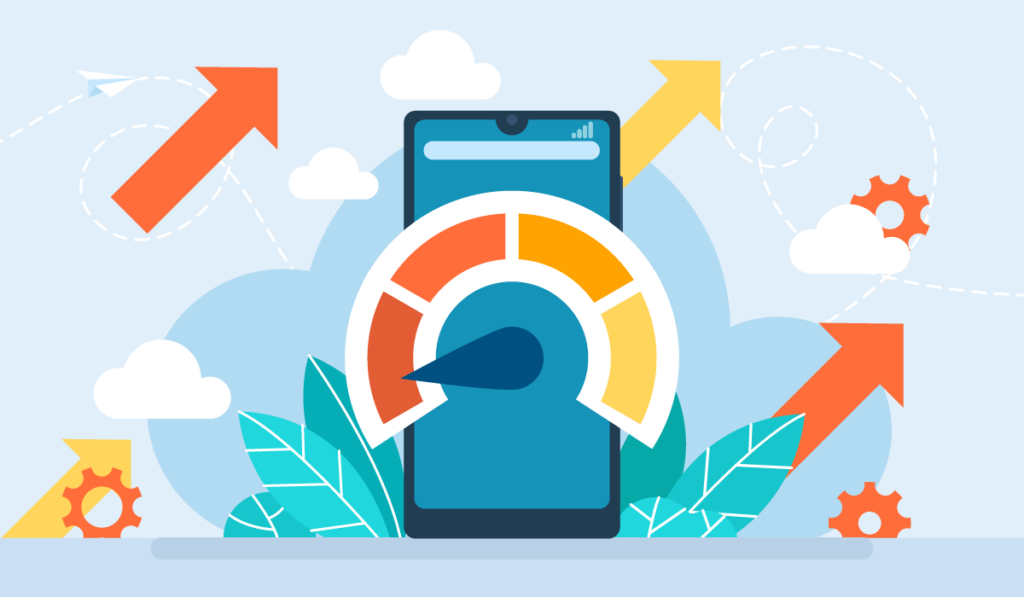
Phone with a gauge pointing towards the red segment.

What is Latency?

Latency, often referred to as ‘lag,’ represents the time delay from when one party on a call speaks, to when the other person hears their voice. Due to the nature of phone calls and the distance between the caller and recipient, some natural delay will always occur. Thankfully, these small delays are typically barely noticeable.

However, longer, more evident delays can be introduced through various factors along the call path that are most likely outside of your team’s internal control. These include the number of network hops and the chain of hardware components that ultimately connects the call.

What Are The Effects?

High latency can adversely affect the quality of your voice and video calls:

  1. Greater communication delays: High levels result in noticeable delays between speakers during voice calls, making conversations feel unnatural. This issue is amplified in video calls, where it can cause distortion issues between audio and video streams, leading to distracting discrepancies between the words spoken and lip movements.
  1. Reduced real-time interaction: Latency hampers the effectiveness of real-time interactions, posing difficulties for users to engage in fruitful conversations. This issue becomes particularly problematic in situations where quick responses and immediate feedback are crucial, such as during business negotiations or virtual collaboration sessions.
  1. Increased frustrations: Users are likely to become frustrated with the delays and disruptions it causes. These frustrations not only impact individual experiences but also carry the potential for reputational damage to your organization.
  1. Diminished productivity: In business environments, high latency in communication and collaboration tools or systems can hinder participation and productivity. It also significantly increases the likelihood of misunderstandings. Unfortunately, this has the potential to reduce the overall efficiency and success of your distributed teams.
  1. Escalated customer churn: In terms of customer and user applications, high latency has been shown to drive customers away. This is because people prefer seamless and responsive communication experiences. Not only does this cause reduced customer satisfaction scores and lower brand loyalty, but your audio issues could also be driving customers towards your competitors.
  1. Exacerbated audio issues: High latency often contributes to or exacerbates packet loss and jitter problems. This will further degrade the quality of your voice and video calls. Packet loss can result in missing audio or video segments, while jitter can cause uneven and choppy playback.

How to Measure It?

Latency, measured in milliseconds (ms), can be assessed in two ways:

  1. One-way: This measures the time it takes for a data packet to travel in one direction only. It is commonly used to diagnose network problems.
  2. Two-way / round trip: This measures the round trip time and is frequently used to calculate mean opinion scores (MOS).

Guidelines

  • For VoIP calls, a one-way latency of 20 ms is standard and falls within the normal range.
  • According to research by Gregg Communication Systems, latency less than 150 ms is barely perceptible and is generally acceptable. However, they warn that latency should not exceed 150 ms, emphasizing its potential to dramatically reduce call quality and cause issues.
  • The International Telecoms Union (ITU) recommends that one-way latency should not exceed 150 ms for voice calls (or 300 ms for round trip). Anything beyond these thresholds can lead to a significant decline in call quality, resulting in incomprehensible, distorted, and non-productive conversations.
  • IDC’s research also highlights that 90% of business leaders specify they need a very low latency of 10 ms or less to ensure the success of their applications.

Cyara’s Testing

Today’s users hold high expectations for call quality, and businesses, such as yours, rely on clear communication channels, especially for customer interactions.

This is why many organizations are now taking a more proactive approach to their audio quality management, including latency. Reducing this is frequently a priority during the design and optimization of communication systems. Recent technological advancements, including improved internet infrastructure and faster processing speeds, aim to address these challenges. Techniques like Quality of Service (QoS) management, adaptive streaming, and more efficient codec algorithms also play a crucial role in actively minimizing its impact.

Cyara’s latency test empowers you to replicate the customer call flow, and quantify the latency that your customers’ experience. As a result, you have the power to proactively measure any delay on your calls. What’s more, repeated testing allows you to detect where there are variations over time. Additionally, the data generated enables you to make more informed routing decisions. All these aspects empower your team to take swift action in minimizing latency on your lines, ultimately enhancing the experience for both customers and staff.

For further details on Cyara’s latency test, see our contact center number testing page or reach out to our team directly.

Read more about: Audio Quality, Automated Testing, Call Centers, Contact Centers, Latency

Ready for seamless CX assurance?

Learn how Cyara’s AI-led CX productivity, growth, and assurance engine can help you eradicate bad CX.

Speak to an expert
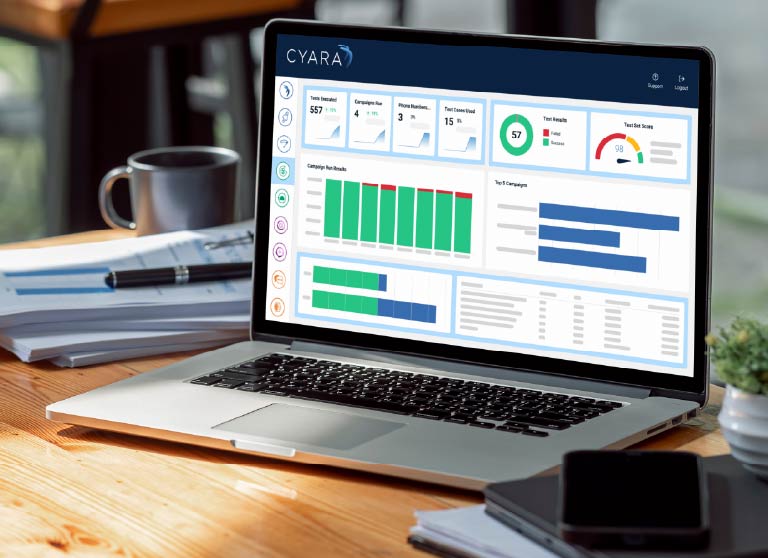
Office view with Cyara dashboard

Related Posts

agent environment monitoring

November 20, 2025

Overcome Call Quality Challenges: How Agent Environment Monitoring Ensures Success for Hybrid and Remote Agents

Remote and hybrid agent environments can hide many CX defects. Overcome common CX challenges with an agent environment monitoring solution.

Topics: Agent Environment Monitoring, Automated Testing, Call Centers, Customer Experience (CX), Cyara ResolveAX

Comprehensive CX assurance solution

November 6, 2025

5 Advantages of Leveraging a Comprehensive CX Assurance Solution

Many CX assurance tools are channel-specific, leading to errors in your infrastructure. Discover the advantage of a comprehensive solution.

Topics: Automated Testing, Contact Centers, Customer Experience (CX), CX Assurance

CX performance testing

October 23, 2025

Why Performance Testing Is More Than Just Speed: It's About Reliability and Resilience

Many view CX as a race to the finish line. But find out why performance testing also assures reliability and resilience for long-term success.

Topics: Automated Testing, Contact Centers, Customer Experience (CX), Performance Testing

Footer

  • AI-Led CX Assurance Platform
    • Cyara AI Trust
    • Cyara Botium
      • Functional & regression testing for AI agents
      • LLM-driven AI agent testing
      • Load testing for AI agents
      • NLP analytics for conversational AI in CX
    • Cyara CentraCX
    • Cyara Cloud Migration Assurance
    • Cyara Cruncher
    • Cyara Number Trust
    • Cyara probeRTC
    • Cyara Pulse 360
    • Cyara Pulse
    • Cyara qualityRTC
    • Cyara ResolveAX
    • Cyara testingRTC
    • Cyara testRTC
    • Cyara upRTC
    • Cyara Velocity
    • Cyara Voice Assure
    • Cyara watchRTC
  • Use cases
    • Agent desktop testing
    • Cloud contact center monitoring
    • Contact center number test types
    • Contact center testing
    • Continuous testing
    • Conversational AI testing
    • CX monitoring
    • DevOps for CX
    • Email & SMS testing
    • Functional testing
    • Incident management
    • IVR discovery
    • IVR testing
    • Load & performance testing
    • Omnichannel testing
    • Outbound call testing
    • Regression testing
    • Voice biometrics testing
    • Voice of the customer
    • Voice quality testing
    • Web interaction testing
  • Resources
    • CX Assurance blog
    • Customer success showcase
    • Events & upcoming webinars
    • Resource library
    • On-demand webinars
    • Cyara portal & support site access
    • Customer community
  • About us
    • About Cyara
      • About us
      • Leadership
      • Careers
      • Cyara awards
      • Legal statements, policies, & agreements
    • Services
      • Cyara Academy
      • Consulting services
      • Customer success services
      • Technical support
    • News
      • CEO’s desk
      • Press releases
      • Media coverage
    • Partners
      • Partners
      • Integration & technology partners
      • Platform Integrations
  • LinkedIn
  • Twitter
  • YouTube

Copyright © 2006–2025 Cyara® Inc. The Cyara logo, names and marks associated with Cyara’s products and services are trademarks of Cyara. All rights reserved. Privacy Statement