Over the past several years, many business and contact center leaders have started to notice a recurring pattern: CX channels have multiplied, customer expectations have greatly accelerated, but traditional and manual testing processes have failed to keep pace. The result? Customer journeys have become more fragmented than ever, often littered with issues like broken handoffs, inconsistent personalization, and AI-driven journeys that behave unpredictably under real-world load.
Learn how leading global enterprises are improving their end-to-end CX performance with omnichannel testing solutions from Cyara.
For example, a customer may start by asking a voice assistant a simple question, switch to a chatbot for clarification, escalate to a human agent, and later return through an app to complete the same task. When any touchpoint misfires, the entire relationship feels shaky, regardless of how polished the individual channels might be.
Especially as contact center technology continues to evolve with agentic AI, personalized workflows, and dynamic routing, it’s become more important than ever to patch the gaps that traditional testing failed to identify. But with an effective, automated omnichannel testing strategy, you can shift your focus from chasing defects in the live environment to proactively improving your CX offerings by understanding how your real customers are experiencing your interactions.
Looking forward to 2026, here are five trends redefining how leading global businesses are testing, monitoring, and optimizing their omnichannel strategies to deliver accurate, reliable, and trustworthy customer journeys.
1. Gain visibility into AI-powered journey performance
The rise of generative and agentic AI within the contact center is reshaping the way customers and businesses communicate. Voice bots can now answer open-ended questions with human-level fluency, AI agents can infer customer intent from nuanced phrasing, and predictive, autonomous systems can decide when to escalate or reroute. But these AI-driven interactions are inherently variable. Unlike previously deterministic and scripted CX systems, these AI-powered systems are constantly evolving, bringing a new level of personalization and innovation as well as risk.
Now, it isn’t enough to simply evaluate AI-powered CX performance based solely on “uptime.” Rather than a simple pass/fail check, your omnichannel testing solutions must be able to assess whether your AI agents are understanding context, responding to customer queries accurately and with the correct amount of detail, reflect appropriate tone, and align with your industry’s specific compliance and safety regulations. Failure in any of these buckets can lead to disaster for your bottom line, compliance, and reputation.
As AI has become the backbone for many CX channels, it’s more important than ever to confirm your systems are not only online, but remaining stable and working as intended, even as the underlying model evolves.
2. Test and validate full, end-to-end journeys
In the past, QA teams often tested channels individually, within their own isolated siloes, without any overlap. The voice team verified IVR routing, digital teams checked app functionality, and contact center managers monitored agent workflows. Yet customers rarely stay inside one channel from start to finish. They move fluidly between touchpoints, expecting continuity across systems once kept apart.
Instead of validating individual channel performance and moving onto the test, your testing must encompass the entire end-to-end customer journey. Just as your customers log into mobile apps, transition to email or SMS, and then chat with a bot, your tests must assess every handoff point for potential gaps. And, in turn, this omnichannel testing strategy uncovers issues channel-specific testing would never identify.
By 2026, the organizations offering the most seamless CX are those who test journeys as customers experience them: nonlinear, multi-step, and cross-channel.
3. Eliminate manual testing, for good
Within the past year, CX technology has changed at a breakneck pace, making traditional methods of manually testing and monitoring your CX channels an impossible task. In addition, customer expectations have only risen, meaning that as soon as they encounter an issue in the live environment, they’ll jump ship from your brand and find a competitor who will offer the quality service they expect. Every interaction counts, and you can’t afford to be spending your precious time and resources on manually dialing through every IVR pathway.
Automated CX testing is the only answer. With the right automated CX assurance solution, you can simulate real-world customer interactions and measure performance in a fraction of the time compared to outdated manual labor. Even better, an automated solution can detect edge cases, which might otherwise go unnoticed or get lost in the shuffle during traditional processes.
Autonomous omnichannel testing makes it possible for your team to focus on high-priority tasks, eliminate the risk of human error, and cut operational costs.
4. Verify real-time performance in production
Even the best pre-release testing can’t fully predict how experiences behave in the real world. Production environments integrate with fluctuating third-party systems, scale under unpredictable load, and operate across diverse networks. When a single webhook slows down or a vendor updates an API, customers feel the impact immediately.
Instead, now’s the time to monitor CX performance ahead of deployment. This kind of monitoring reshapes operational strategy, bridging the gap between IT observability and CX management to give your teams shared visibility into how the experience behaves moment to moment. When an issue arises, they don’t have to rely on guesswork and hunches. Instead, they’ll be able to pinpoint exactly where the failure occurred and begin issue remediation immediately.
5. Improve decision-making with unified, data-driven insights
CX teams have never had more data, yet decision-making often remains surprisingly difficult. Metrics often live in separate systems: NPS in one, bot analytics in another, IVR performance in a third, and agent QA in a fourth. Without a unified view, teams can diagnose symptoms but struggle to identify root causes.
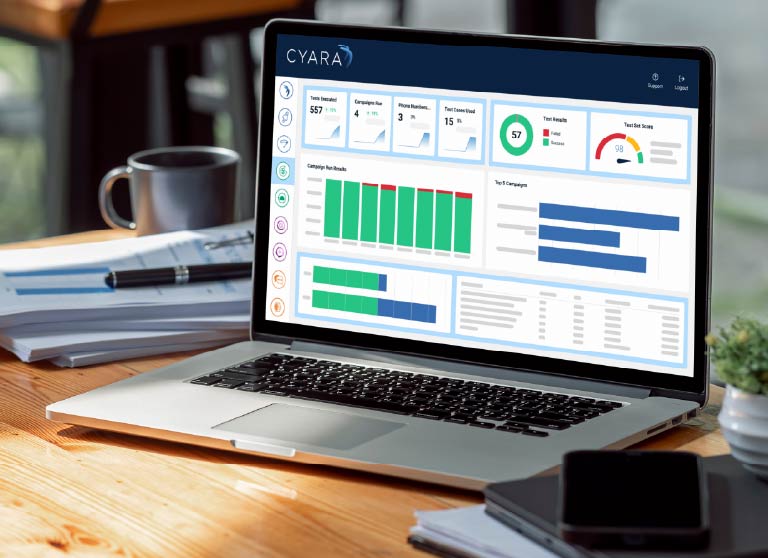
The emerging solution is a unified dashboard that consolidates testing results, monitoring data, behavioral metrics, and channel performance into one shared environment. With this visibility, teams can understand not just what is happening, but why, and determine next steps based on the provided insights.
Organizations embracing unified intelligence are shifting from reactive problem-solving to proactive experience design. Instead of waiting for issues to surface through customer complaints or analytics anomalies, teams can anticipate friction, model the impact of changes, and prioritize improvements that deliver measurable value.
Future-Proof Your Omnichannel Testing with Cyara
In 2026, the gap between average and exceptional CX will be determined by a single factor: how effectively organizations test, monitor, validate, and understand the journeys their customers take. Enterprises that prioritize not only uptime per individual channel, but CX performance from as early as production all the way through to an interaction’s final touchpoint will realize the true benefits of omnichannel assurance.
The companies setting the pace are no longer guessing where CX breaks. They’re seeing it, anticipating it, and preventing it before customers are affected.
As the industry’s No. 1 choice for CX productivity, growth, and assurance, Cyara is here to help you tackle every CX obstacle headed your way in 2026 and beyond.
Contact us for a personalized demo and see how you can benefit from our automated omnichannel testing solutions or visit cyara.com for more information.